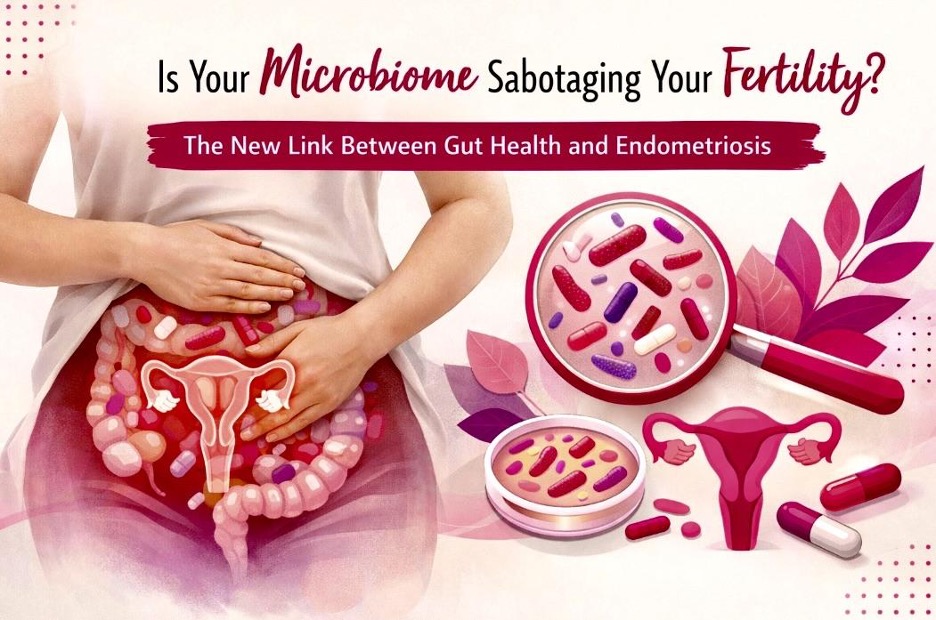
Is Your Microbiome Sabotaging Your Fertility
If you’ve been navigating the world of endometriosis, you already know it’s about so much more than "just a bad period." It’s a full-body experience that impacts your energy, your mood, and: most significantly for many: your dreams of starting a family.
For a long time, the medical world treated endometriosis and infertility as two separate silos, or worse, as a "mechanical" problem where lesions simply blocked the way. But we’re learning that there is a much deeper, much more fascinating story happening beneath the surface. It’s a story about your internal ecosystem: your microbiome.
New research is pulling back the curtain on how the bacteria living in your gut and your reproductive tract might be the hidden "saboteurs" or the "secret weapons" in your fertility journey. At Doctor Carmel - Healthy Parents Healthy Children, we believe in looking at the root cause, not just the symptoms. So, let’s talk about why your gut might be the missing piece of your fertility puzzle.
The "Endo-Gut" Connection: It’s All About Balance
We used to think the uterus was a sterile environment. We now know that’s completely wrong. Just like your gut, your reproductive tract is home to a bustling community of microbes. When this community is thriving and balanced, it’s called symbiosis. When it’s out of whack? That’s dysbiosis.
For women with endometriosis, dysbiosis is incredibly common. In fact, research shows that women with endo often have a distinctly different microbial "fingerprint" than those without it. This relationship is bidirectional: an imbalanced microbiome can trigger the inflammation that fuels endometriosis, and the presence of endometriosis can further disrupt your microbial balance.
The Estrobolome: Your Gut’s Role in Estrogen
One of the most critical roles your gut plays in endometriosis is through a collection of bacteria called the estrobolome. These specific bacteria are responsible for metabolizing and clearing estrogen from your body.
In a healthy system, your liver processes estrogen, sends it to the gut, and you poop it out. But if your gut microbiome is imbalanced, these bacteria can produce an enzyme called beta-glucuronidase. This "re-activates" the estrogen, sending it back into your bloodstream. Since endometriosis is an estrogen-dependent condition, this "recycled" estrogen is like pouring gasoline on a fire.
The Fertility Link: Why Implantation Fails
If you’ve experienced failed IVF cycles or "unexplained" infertility, the state of your microbiome might hold the answer. Studies have found that a healthy endometrial environment is dominated by Lactobacillus species. These are the "good guys" that create a protective, slightly acidic environment where an embryo feels safe to land.
However, when pathogenic bacteria like Gardnerella, Streptococcus, or Staphylococcus take over, the environment becomes hostile. This dysbiosis can lead to:
Chronic Endometritis: A silent inflammation of the uterine lining that prevents embryos from sticking.
Impaired Receptivity: Your body may literally "reject" the embryo because the microbial signaling is off.
Increased Miscarriage Risk: Research indicates that certain bacterial imbalances are closely linked to early pregnancy loss.
For women with endometriosis, the stakes are even higher. Endometriosis affects roughly 10-15% of women, but it accounts for nearly 50% of infertility cases. This 20-fold increase in risk isn't just bad luck: it's often a sign that the body’s internal "soil" isn't ready for the "seed."
The Problem with "Symptom-Only" Medicine
Most traditional approaches to endometriosis focus on surgery to remove lesions or hormonal birth control to suppress the cycle. While these can be helpful for pain management, they rarely address why the inflammation started in the first place.
This is where many fertility journeys hit a wall. You can have the "perfect" surgery or the most expensive IVF protocol, but if your gut is leaking toxins into your bloodstream and your uterine microbiome is in a state of war, the success rates drop significantly.
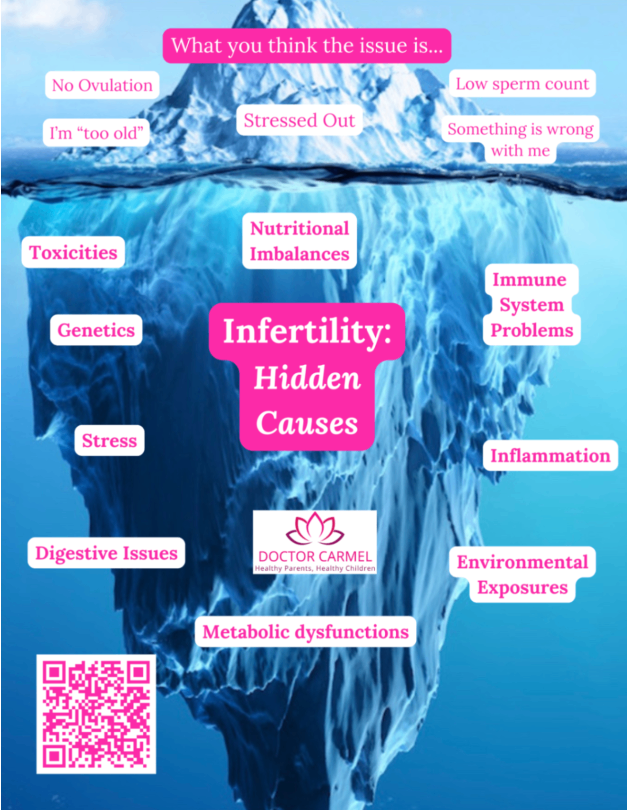
We need to look at the "Iceberg Effect." The pain and the infertility are the tips visible above the water, but the root causes: genetics, toxicities, and gut health: are hidden below.
Precision Biology: The Root-Cause Revolution
At Doctor Carmel, we don't believe in "one-size-fits-all" fertility plans. You are a unique biological individual, and your treatment should reflect that. This is where Precision Medicine comes in.
Instead of guessing which probiotic might help or trying another round of antibiotics that might further disrupt your gut, we use advanced diagnostics to see exactly what’s happening in your body.
1. Microbiome Mapping
We can now test the specific bacterial strains in your gut and your reproductive tract. Recent research has identified that successful pregnancies are often linked to higher levels of Eubacterium hallii, while failures are linked to Haemophilus. Knowing your specific profile allows us to use targeted prebiotics and "precision" probiotics to shift the balance.
2. Genetic Insights
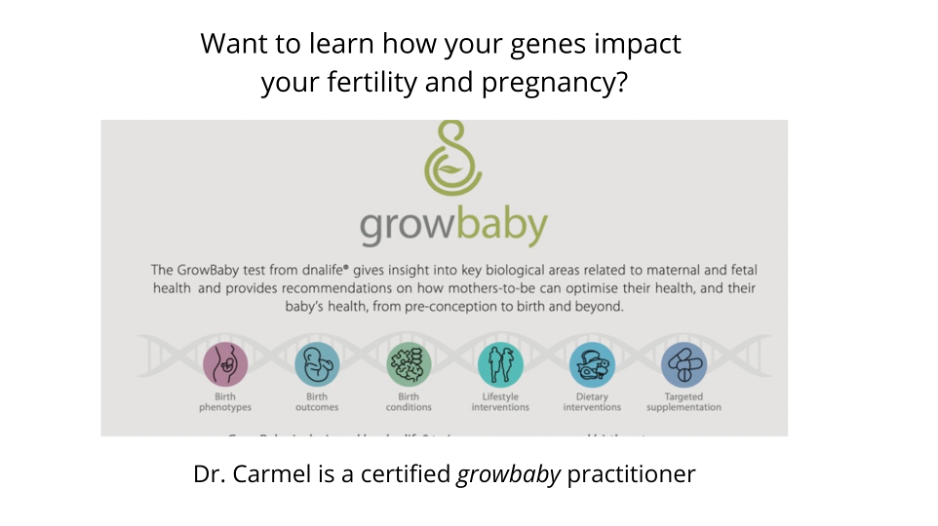
Your genes dictate how well you detoxify estrogen and how your body handles inflammation. Using tools like the GrowBaby test, we can identify genetic variations that might make you more susceptible to the complications of endometriosis.
3. Addressing the "Leaky" Connection
Endometriosis is often associated with "leaky gut" (increased intestinal permeability). When the gut lining is compromised, undigested food particles and bacterial toxins (LPS) escape into the pelvic cavity. This triggers a massive immune response, creating a pro-inflammatory environment that is toxic to both eggs and sperm. By healing the gut, we calm the immune system and improve fertility outcomes.
> Important Note: While supplements and diet are powerful, they should be used as part of a supervised, comprehensive strategy. Adding high doses of the wrong probiotic can sometimes worsen an existing overgrowth like SIBO (Small Intestinal Bacterial Overgrowth).
Steps You Can Take Today
Ready to start reclaiming your fertility and your health? Here are some foundational steps you can start right now to support your microbiome:
Focus on Fiber: Your good bacteria eat fiber. Aim for 30+ different types of plant foods a week to increase microbial diversity. Think colorful veggies, seeds, and nuts.
Ditch the "Fertility Killers": Excess sugar and highly processed seed oils fuel the "bad" bacteria and increase systemic inflammation.
Manage Your Stress: The gut-brain axis is real. High cortisol levels can actually change the composition of your gut bacteria and increase gut permeability.
Get Targeted Testing: Stop the guesswork. If you’ve been struggling to conceive with endo, it’s time to look at your microbiome and your genetics.
How We Can Help You
The journey through endometriosis and infertility can feel lonely and overwhelming. But you don't have to do it alone. My approach at Doctor Carmel - Healthy Parents Healthy Children is designed to give you a roadmap through the noise.
Whether you are just starting to think about preconception or you’ve had multiple failed IVF transfers, we focus on optimizing your health from the inside out. Through our Concierge Fertility Strategy, we combine advanced functional testing with personalized nutrition and lifestyle interventions to ensure your body is the healthiest possible home for your future baby.
Your Takeaway Summary:
The Gut-Endo Link is Real: Your microbiome regulates the estrogen that fuels endometriosis.
Implantation Requires Balance: A Lactobacillus-dominant uterine environment is key for a successful pregnancy.
Root Causes Matter: Surgery and hormones manage symptoms; precision medicine addresses the source.
You Have Power: Through diet, stress management, and targeted testing, you can change your microbial "soil."
Ready to find out what’s really going on beneath the surface?
Let’s stop the symptom-chasing and start focusing on your unique biology. You can book an Initial Consultation with me to discuss how we can optimize your microbiome and your fertility.
For more resources, feel free to explore our Programs or read more on our Blog. You’ve got this, and I’m here to help you every step of the way!